No Safewords and Here's Why
I was asked to address why, “no safewords.”
Let’s say a small group of friends go to a restaurant and the server brings chips, salsa, and a variety of hot sauces – five heat levels. Everyone goes to their favorites and some experiment with a little spicier. All but one friend has eaten spicy foods their entire life.
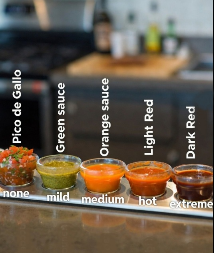
Everyone asks the novice to try the hottest, but they’re not a fool. So, like all new things in life with consequences, you start with the mildest. The newbie eats some of the mildest hot sauce by only dipping the outermost tip of the chip in it. At this pace, there’s no risk and no reward.
A friend at the table suggests, if you want to taste the sauce’s flavor and subtle nuances, take the chip and pick up a sizeable quantity of it. Imagine the chip is a tablespoon. You engage and try it in this fashion and your friend is correct. The nuances of the chile peppers, how it was prepared, and the seasonings come to life in your mouth!
When the time comes to challenge your palate, do you jump into the next hot sauce with commitment? Of course not. The least spicy of hot sauces typically are only seasoned to be warm enough with black pepper or some chili pepper flakes. The base is something akin to blended tomatoes, onion, and cilantro (pico de gallo).
So, for your next challenge, you take your chip, submerge it into the next hot sauce and then you shake off the excess. Shaking off enough that there is an adequate covering of the chip to actually taste it, but not so much that if it truly overwhelming, some water, more chips, and time will heal your extremely sensitive taste buds. If that was manageable, go back to the tablespoon method and work your way up the spicy ladder…
Then meals arrive, and its time slather your food in a sauce from which your spiciness choice was determined. During the meal, you’re able to communicate how much more favorable the food was. How the subtle nuances of flavors and textures complement the pairing of your food and hot sauce.
If one of your dining companions had taken the most spicy and poured a generous quantity on your food and said, “try this one,” it would have ruined your experience, ruined the food, and very likely to ruin the social experience of the evening.
Now, the time comes to try next spiciest. To feel the burn, but to also taste it. You use your chip to spoon it up, you shake it off, devour it, and decide if it’s doable. All the while, the biggest part of the entire experience, your introduction to spicy foods, was never ruined, your experience with a particular ethnicity of food wasn’t put onto the undesirable list, and best of all, your entire evening was a success!
The questions everyone asks at the end of the evening is, “Did you have a good time, how was the food and hot sauce experience?” “Would you do it again?”
Letting the organizer put the food in front of you would never have worked. They don’t know how you feel. One can’t quantify the flavor settings in your mouth. Yes, that’s hot, that’s hotter, and that’s insanely hot defines an increasing intensity of Scoville units, but there isn’t any nuance.
A month goes by and a friend asks if you’d like to go back to hot sauce bar. Not only do you know where to start and what your limits are, but you understand how far you’ll go. Any friend at the table that paid attention the last time, could choose the hottest of your personal preferences, apply it to your meal when it arrives, and you’d never worry about the spiciness level or the intentions of your friends.
When you’re experimenting with some of the many kinks that might incorporate pain, saying, “more, more, more, and harder, harder, harder,” when does one use the safeword? It just ruins the moment. Saving that safeword on the tip of your tongue, just in case, it’s where your attention ends up lying…
When it’s time to get down to business, your next experience has to rely on your previous experiences. This is what you do. Just like you control how much sauce goes on your own chip, the recipient controls the intensity of the sensation. The person applying the pressure or impact starts light.
Hands gently on the throat with a brief squeeze, then release and observe; or a light slap, then pause. They watch for affirming signs: relaxed body, moans, eyes asking for more, hands pulling them closer. If the recipient wants more, they say it clearly, “harder,” “again,” “tighter.”

If they want less, they say “lighter,” “slower,” or “pause.” The person giving never asks “do you want more?” or “is this okay?” because a hesitant nod or misread silence can lead to real harm. The recipient stays in control by actively directing what they need in the moment.
Over time, the giver learns the recipient’s exact threshold the same way your friends learned which sauce you loved most. No guessing, no overpowering, and because the recipient is the one offering the information, they never lose agency. A safeword implies there might be a moment when normal communication fails and someone could ignore limits or push too far. When the recipient is the one guiding every step with their own words and cues, that moment never arrives.
So, the next time you and your partner get together, the recipient that asks, gets what they want. It’s that easy. Communicate to your partner so there is never any guessing, you don’t get hurt, and everyone keeps playing!
Have fun.
Alina
Counterarguments Against Safewords in Kink Communities
The novel's dynamic (deep trust, upfront negotiation, no explicit safeword in a long-term TPE/poly family) aligns with a niche but real subset of kink views. The mainstream BDSM community (e.g., SSC/RACK principles) strongly recommends safewords as a clear, unambiguous tool for ongoing consent, especially in scene play or with newer partners.
Many view "no safewords" as a major red flag for potential abuse.However, experienced practitioners in certain dynamics offer thoughtful counterarguments. These emphasize advanced trust, not beginner play.
Here's a balanced breakdown of the pro-no-safeword perspectives
Incompatibility with Full Surrender in TPE/Master-slave Dynamics
Some argue safewords undermine true power exchange. Consent happens upfront through detailed negotiation/limits, and the dominant takes full responsibility for monitoring (non-verbals, body language, check-ins). "No" can mean "no" in plain language, or the sub trusts the dom to read them perfectly. Example: In 24/7 or long-term TPE, safewords are seen as breaking the illusion of total surrender.
Sources: People in no-safeword dynamics explain reliance on trust and dom intuition:
https://www.reddit.com/r/BDSMcommunity/comments/1i8q48v/those_of_you_without_safewords_how_do_you_keep/
Another Reddit AMA from a male sub in 24/7 no-safewords:
https://www.reddit.com/r/BDSMcommunity/comments/cbbw0m/i_do_247_bdsm_with_no_safewords_as_a_male_sub_ama/
Blog on darker/no-safeword play as advanced (not abstinence-only shaming):
https://kinkbeyondlimits.com/what-age-or-experience-level-does-a-dark-dynamic-require/
Historical "Old Guard" Influence
Pre-1990s gay leather "Old Guard" scenes allegedly rarely used safewords, relying on experience, protocols, and reading partners. Modern practitioners sometimes reference this for high-protocol or no-safeword styles. (Note: Some debate if "Old Guard" was as uniform as claimed.)
Sources:
https://oldguardleather.men/ssc-bdsm-safe-sane-consensual/
High-protocol guide tracing to Old Guard:
https://www.bemorekinky.com/blog/protocols/high-protocol-bdsm/what-is-high-protocol-bdsm
Safewords Can Give False Security or Be Impractical
Critics say safewords aren't foolproof (e.g., sub in subspace might forget, gagged can't speak, extreme play makes them unreliable). Better: Deep vetting, gradual escalation, and dom vigilance. Some prefer alternatives like traffic lights or plain "stop."
Sources: Article on troubles with safewords:
https://leatherati.com/the-trouble-with-safewords-8ade4ed3da90
Reddit on no-safeword CNC as pre-negotiated power exchange:
https://www.reddit.com/r/BDSMcommunity/comments/qjr1dv/no_safeword_for_ncn_requested/
Personal Responsibility and Risk Awareness
No-safewords is framed as risk-aware consensual kink (RACK/PRICK) for veterans only. The sub consents to the risk, trusting the dom won't violate hard limits.
TikTok/threads mention consent in no-safeword dynamics via communication, (general search, but ties to your hot sauce analogy).
These views are minority and controversial, most communities stress safewords prevent harm. No-safeword play requires years of trust, not casual scenes.